Trump Administration Launches Foundry School to Rebuild America’s Manufacturing Workforce
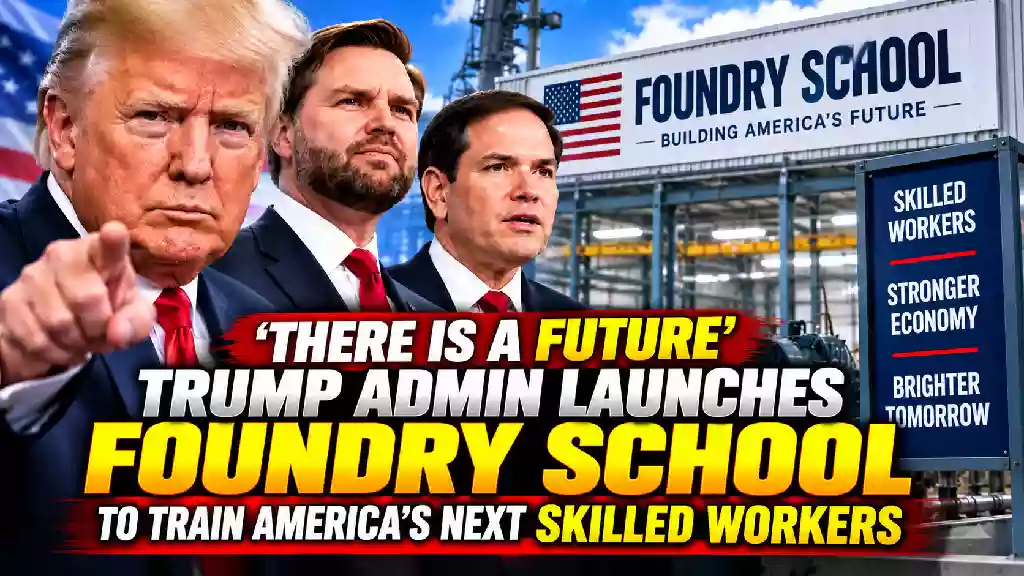
Trump administration launches Foundry School to train America’s next generation of skilled workers and strengthen the nation’s manufacturing workforce.
Trump Administration Launches Foundry School to Rebuild America’s Manufacturing Workforce
Trump’s Foundry School Takes Aim at America’s Skilled Worker Crisis
The Trump administration is taking a new step toward rebuilding America’s manufacturing workforce with the launch of the Foundry School, an initiative designed to train engineers, technicians, entrepreneurs and future industrial leaders for high-demand careers.
Announced by Vice President J.D. Vance and Secretary of State Marco Rubio, the program is built around a straightforward message: American manufacturing needs people with the skills to design, build and operate the industries that will drive the nation’s economy.
The administration says U.S. manufacturers could need an estimated 3.8 million additional skilled workers by 2033, particularly in areas including semiconductors, defense and energy.
A New Push to Rebuild American Manufacturing
The Foundry School is part of a broader effort to promote the reindustrialization of America and strengthen domestic manufacturing capabilities.
The program seeks to connect students directly with experienced founders, CEOs and leaders in advanced manufacturing. Instead of treating education as simply a path toward a traditional academic credential, the initiative emphasizes practical skills that can lead to employment in high-paying and potentially long-term careers.
That approach reflects a growing debate over whether America’s education system has placed too much emphasis on conventional four-year degrees while not doing enough to prepare workers for technical and industrial occupations.
Vance emphasized the idea that young Americans should see a future in building things—and that manufacturing can provide not only financial opportunity but also a sense of purpose and dignity in work.
Universities and Industry Leaders Join Forces
The Foundry School is not simply a traditional government training program. Its structure brings together universities and private-sector manufacturing leaders.
According to the source material, the program involves eight universities and 17 sessions, with participating institutions including Arizona State University, Georgia Tech, Ohio State University, Penn State, the University of Kansas, Vanderbilt University and Washington University in St. Louis. A core program hosted by Stanford University is also designed to build advanced manufacturing capabilities.
The curriculum focuses on areas such as modern factory design, materials, supply chains and advanced manufacturing.
The State Department has also described the initiative as a way to connect participants with companies involved in building and operating advanced manufacturing facilities.
Can America Close Its Skilled Worker Gap?
One of the biggest challenges facing the American manufacturing revival is whether the country can produce enough qualified workers to fill the jobs being created.
Expanding factories and investing billions of dollars in industrial infrastructure can create opportunities, but those investments still require engineers, technicians and workers with specialized skills.
The Foundry School is intended to help address that gap by exposing students to careers that may not receive as much attention as technology, finance or other white-collar professions.
The issue extends beyond manufacturing. The discussion surrounding the program also points to shortages in industries such as mining, where the number of specialized educational programs has declined significantly over the decades.
Rethinking the Four-Year College Path
The Foundry School also enters the debate over the value of traditional higher education.
For years, many young Americans were encouraged to believe that earning a four-year college degree was the most reliable path to financial success. Critics argue that this approach left some graduates with significant student debt and degrees that did not necessarily translate into strong employment opportunities.
The Foundry School offers a different vision.
Students who are already pursuing higher education can be encouraged to consider careers involving manufacturing, engineering, industrial technology and entrepreneurship.
Instead of building only software companies, the idea is to encourage a new generation of entrepreneurs to build physical businesses, factories and technologies while creating jobs for other workers.
Debate Over Government’s Role
The initiative is not without critics.
The source material includes skepticism over whether the government should play a leading role in workforce training. One argument is that private companies have strong incentives to train workers because businesses understand exactly which skills they need.
Others argue that the government’s role can be limited to bringing universities, companies and students together rather than directly controlling every aspect of the training process.
That distinction could become important as the program develops.
The Bigger Goal: Make Manufacturing Attractive Again
Ultimately, the Foundry School represents more than a training program. It is part of an attempt to change how young Americans view manufacturing careers and skilled work.
The administration’s message is that America’s economic future cannot depend entirely on services and finance. The country also needs people capable of designing factories, operating advanced machinery, developing new technologies and producing critical goods domestically.
Whether the Foundry School becomes a model for workforce development remains to be seen. But its launch signals a clear priority from the Trump administration: rebuilding America’s industrial base requires rebuilding the American workforce behind it.
For young engineers, technicians and entrepreneurs, the message is equally direct—there may be a new opportunity waiting in the factories and industries helping shape America’s next economic chapter.
#Trump #TrumpAdministration #FoundrySchool #JDVance #MarcoRubio #AmericanManufacturing #SkilledWorkers #ManufacturingJobs #WorkforceDevelopment #Reindustrialization #AdvancedManufacturing